
We’ve all felt it—that moment when you step into a healthcare system that promises care but delivers something entirely different. Instead of focusing on patients, we are pushed toward rushed visits, quick prescriptions, and endless referrals that benefit insurance companies more than the people sitting in front of us. For both doctors and patients, this reality is frustrating and disheartening. It strips away the purpose of medicine, leaving everyone involved feeling disconnected.
But here’s the good news: change is possible. By rethinking how healthcare is delivered, we can create practices that prioritize time, relationships, and trust. This isn’t about abandoning medicine—it’s about reclaiming it.
The Broken Healthcare System
When Insurance Rules Over Patient Needs
In traditional, insurance-based practices, doctors don’t truly work for their patients—they work for the insurance companies. The rules, time limits, and billing structures are designed to maximize revenue, not improve health. With only 5–8 minutes per visit, doctors are left with two main tools: write a prescription or send a referral.
The result?
- Limited time to address more than one or two concerns
- Increased reliance on pills and referrals
- Patients leaving without real solutions
Medicine Shaped by Profit Goals
In today’s healthcare system, medical training often prioritizes efficiency over healing, moulding doctors to fit a business model rather than empowering them to focus on patient care. Physicians are coached to cut patients off mid-conversation, signal the end of visits by standing at the door, or rely on a nurse to knock and move things along. These tactics aren’t about providing better care—they’re about keeping schedules packed and revenue flowing.
The result is a system where visits are limited to 5–8 minutes, aiming to increase patient volume but leaving critical health needs unmet. Quick prescriptions and referrals may speed up billing, but they often offer only superficial solutions. Cutting patients off might help control time, but it fosters frustration and erodes trust. This approach not only fails patients but also undermines the very purpose of medicine: to heal and build meaningful relationships.
The Toll on Physicians
This profit-driven system doesn’t just fail patients—it takes a heavy toll on doctors as well. Many of us entered medicine with the dream of helping people, but the constant pressure to prioritize profit over care leaves us feeling disconnected from our purpose. Over time, this disconnect wears us down, both professionally and personally.
The emotional strain of watching patients get sicker without receiving real help is overwhelming. Professionally, it’s disheartening to see years of training reduced to quick fixes and rushed visits. On a personal level, the joy and fulfilment that first drew us to medicine begin to fade, replaced by burnout and frustration. This system not only compromises patient care but also erodes the well-being of the very people tasked with delivering it.
Dr. Jade’s Journey: From Childhood Dreams to Transforming Healthcare
I’ve had the privilege of meeting some truly remarkable individuals, and my recent conversation with Dr. Jade was no exception. Her story is one of resilience, purpose, and a deep commitment to reimagining what healthcare can be. After our conversation, I couldn’t wait to share her journey with you here on the blog. Let me take you back to where it all began—her childhood dreams of becoming a doctor.
A Childhood Dream Takes Root
Dr. Jade’s passion for medicine started early—so early, in fact, that she was just four years old when she first declared she wanted to be a doctor. While most kids were dreaming of becoming astronauts or superheroes, Jade’s vision was clear: she wanted to help people. That dream only grew stronger as she moved through high school and college, where she shadowed physicians and imagined a future filled with meaningful patient care.
When she talked about those early years, I could hear the excitement in her voice. She described how she envisioned medicine as a way to connect with people, to listen, and to make a real difference in their lives. Medical school, as she expected, was tough. But for Dr. Jade, it felt like a necessary step on the path she had chosen—a path that would allow her to fulfil her purpose. Little did she know, the challenges of medical school were just the beginning.
The Harsh Reality of Residency
Residency, as Dr. Jade explained, was where she got her first real glimpse into the business side of medicine—and it wasn’t what she had imagined. Instead of focusing on patients, she found herself navigating a system driven by insurance requirements. Visits were limited to just 5–8 minutes, and the focus shifted to quick prescriptions and referrals that generated revenue rather than meaningful care.
She shared some of the tactics she was coached to use during residency, and honestly, it was hard to hear. Nurses were instructed to knock on the door at minute four to signal the visit was wrapping up. Doctors were encouraged to cut patients off after addressing just one or two concerns. Even something as simple as placing a hand on the door was used as a subtle way to indicate the appointment was over.
These practices left her feeling rushed and disheartened, while patients left feeling frustrated and, often, sicker. It was a system that prioritized efficiency and profit over the very reason she had entered medicine in the first place. Listening to her describe this, I could feel the weight of her frustration—and her determination to find a better way.
A Bold Decision to Change Course
During her residency, Dr. Jade discovered something that would change the course of her career: membership-based care models. These models prioritize people over paperwork, offering longer visits, direct access to doctors, and a focus on building real relationships. For Dr. Jade, this was a revelation. It gave her the courage to step away from the traditional system and create something entirely different.
She told me about the moment she decided to take the leap and launch her own practice. It wasn’t an easy decision—starting something new never is—but she knew it was the right one. She wanted to build a practice that reflected her values, one where patients and doctors could thrive.
The Birth of Nspire Primary Care
And that’s exactly what she did. Dr. Jade founded Nspire Primary Care with a clear vision: to create a healthcare experience that prioritizes time, trust, and genuine care. She built the practice on a foundation of core values that reflect everything she believes healthcare should be:
Time with patients: No more rushed visits. Every patient gets the time they need to feel heard and cared for.
Focus on long-term wellness: The goal isn’t just to treat symptoms but to support overall health and well-being.
Freedom from insurance-driven rules: By stepping away from the constraints of insurance, Dr. Jade created a model that puts patients first.
Listening to her describe Nspire Primary Care, I couldn’t help but feel inspired. This isn’t just a practice—it’s a movement. It’s a bold statement that healthcare can and should be better, and it’s proof that change is possible when you’re willing to challenge the status quo.
Dr. Jade’s journey is a powerful reminder that even in a system as complex as healthcare, there’s room for innovation, compassion, and purpose. Her story left me feeling hopeful, and I hope it does the same for you. If you’re as inspired as I was, stay tuned—there’s so much more to learn from Dr. Jade and the incredible work she’s doing to transform lives and redefine what healthcare can be.
Purpose-Driven Leadership and Advancing Women in Healthcare
Transforming Healthcare Leadership: Lessons from Dr. Jade
During my recent conversation with Dr. Jade, I was struck by her unwavering commitment to redefining what leadership in healthcare looks like. Her story is one of courage, purpose, and a refusal to accept the status quo. As she shared her journey, it became clear that her mission is not just about changing how medicine is practiced—it’s about transforming the very foundation of healthcare to prioritize people over profits.
Dr. Jade spoke passionately about the need to move away from a system that treats patients as numbers on a schedule. “Healthcare should be about relationships,” she said. “It’s about listening without rushing and creating space for real conversations about health.” By stepping outside the traditional insurance-driven model, she has reclaimed the ability to practice medicine with integrity and intention. Her approach is built on a few key principles: extended visits that allow time for meaningful care, direct access to physicians without unnecessary barriers, and a model designed around people, not profit. This shift, she explained, isn’t just better for patients—it allows doctors to reconnect with the purpose that drew them to medicine in the first place.
One of the most inspiring parts of our conversation was hearing Dr. Jade talk about her role as a woman in medicine. She acknowledged the challenges many women face in the field, from restrictive contracts to overwhelming demands that leave little room for leadership on their own terms. “I wanted to show that women can run practices, shape policies, and redefine how care is delivered,” she said. Dr. Jade has made it a point to challenge the old system by refusing non-compete agreements that limit growth, designing practices that align with family and community values, and demonstrating that leadership in healthcare can look different. Her story is a powerful example of how women can lead with purpose and create businesses that reflect their values.
Dispelling Misconceptions about Healthcare
One of the most eye-opening moments of our conversation was when Dr. Jade addressed the common misconception that health insurance equals medical care. “Insurance companies set the rules,” she explained, “and those rules often dictate how quickly we move through appointments and what treatments we can offer.” A five-to-eight-minute visit, she pointed out, leaves little room for deeper conversations, leading to prescriptions or referrals instead of real solutions.
By stepping away from this model, Dr. Jade has created a patient-centered approach that focuses on prevention, long-term health, and direct doctor-patient relationships. “It’s about putting care back into healthcare,” she said.
Breaking Free from Restrictive Systems
Dr. Jade also shared her thoughts on the restrictive contracts that keep many physicians tied to systems that don’t serve patients well. Non-compete agreements, she explained, create dependency by locking doctors into one employer and making it financially risky to leave. “Breaking free from these restrictions gave me the freedom to design a practice that truly serves patients,” she said.
This independence has allowed her to return to the core of medicine: listening, caring, and building trust. Longer visits and open communication have transformed the experience for both patients and doctors, creating a system where everyone feels supported.
A Reflection on Dr. Jade’s Vision
As I listened to Dr. Jade share her story, I couldn’t help but reflect on the broader implications of her work. Her journey is a reminder that meaningful change is possible, even in a system as complex as healthcare. It takes courage to challenge outdated norms and build something new, but Dr. Jade has shown that it can be done—and that it’s worth it.
What struck me most was her emphasis on relationships. In a world that often prioritizes speed and efficiency, Dr. Jade’s approach feels refreshingly human. She’s not just transforming healthcare; she’s setting an example for what leadership can look like in any field. Her story left me inspired, and I hope it inspires you too.
Dr. Jade’s work is proof that when we put people first, we create systems that benefit everyone—patients, doctors, and communities alike. It’s a vision of healthcare that feels not only necessary but also deeply hopeful.
ABOUT LISA CHASTAIN:

Lisa uses many tools that she used throughout her money journey and invites you to try them as well. As a first step, she recommends reading her book, Girl, Get Your $hit Together in which she helps women tackle their financial story and shares her entire story. After reading the book, she invites listeners to join the Stop Budgeting System– the very method she used to gain financial freedom and clarity.
ABOUT MY NEW BOOK:
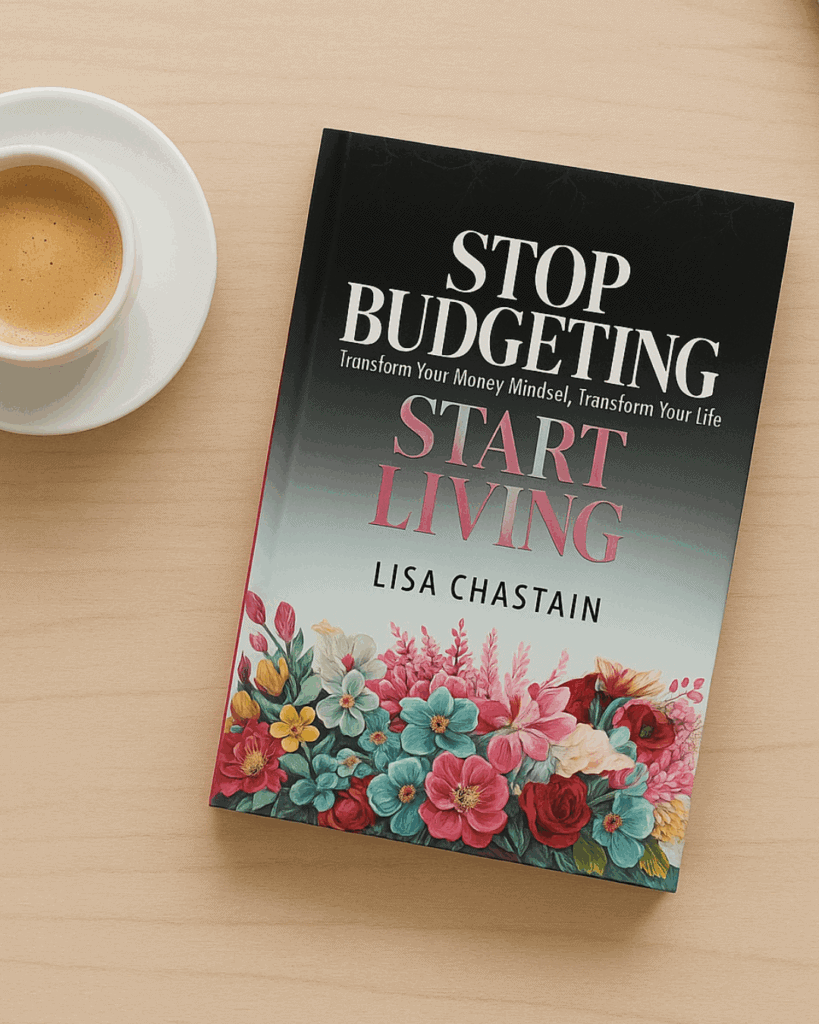
I’m beyond excited to share that Stop Budgeting Start Living is officially here! This book is the culmination of years of working with women who are ready to rewrite their money stories and step into financial confidence.
Inside, you’ll find strategies to uncover the roots of your money mindset, break free from limiting financial patterns, and create a new path toward wealth and independence.
This release feels especially powerful as we honor the progress women have made financially—and the bold steps we’re still taking together. I can’t wait for you to dive in, apply these tools, and start building the financial future you deserve.
Your journey to living fully, without the weight of restrictive budgeting, starts now.