
How Did Epstein Make His Money (And Why It Should Concern You)
I’m sitting with you as new documents about Jeffrey Epstein (Epstein Files and Money) reshape what many of us already felt: a slow, unsettling confirmation that financial power can hide and protect harm. As someone who has lived near these systems, I describe how money, silence, and institutional protection combined to let abuse thrive, and I explain why that realization can make your relationship with money feel unsafe and fragile.
I trace how banks, transactions, and elite networks moved vast sums with little accountability, and how those realities connect to broader patterns of financial fraud, systemic inequity, and gendered trauma. I offer clear, practical steps you can take to strengthen your financial agency and to join efforts that push for transparency, accountability, and lasting change.
Financial Power and Exploitation
How Epstein Built His Wealth
As I’ve followed the release of these files, I’ve asked myself the same uncomfortable question many of us are asking: Where did Epstein’s money come from? His wealth was built through private banking services, opaque trusts, and networks designed to move large sums with minimal oversight. The transactions tied to his accounts reveal a system that prioritized secrecy over accountability.
This isn’t just about Epstein, it’s about how financial structures can be manipulated to shield the powerful. It’s a reminder that we need to question the mechanisms that allow wealth to concentrate and harm to go unchecked.
The Role of Financial Institutions
We’ve seen how major banks played a role in enabling these transactions. JP Morgan Chase and Deutsche Bank, for instance, reached substantial settlements with victims, and Senate investigators documented thousands of transfers through a single account. Retroactive suspicious activity reports covering $1.3 billion in transactions highlight how delayed oversight can perpetuate harm. This isn’t just a failure of individual institutions, it’s a systemic issue. It’s clear that corporate and regulatory behaviors must change to prevent exploitation on this scale.
Human Trafficking: A Global Financial Scandal
Human trafficking generates an estimated $150 billion annually, much of it through the exploitation of women and children. These profits intersect with mainstream financial systems, as evidenced by the settlements and investigations tied to Epstein’s accounts. I call this the “Epstein effect”: once we understand how money moves in these systems, it changes how we view financial safety.
For many of us, this realization brings up feelings of financial trauma, fight, flight, freeze, overwork, or emotional spending. These are survival responses, not personal failings. By recognizing these patterns, we can begin to reclaim our financial agency and push for systemic change.
Systemic Abuse and Gendered Financial Trauma
The Impact on Women and Children
As I reflect on the systems that have long used money to control bodies and choices, I see how trafficking thrives on violence, silence, and institutional protection. Women and children are disproportionately affected, and the gendered wealth divide only deepens this vulnerability. Globally, women hold 30–40% less wealth than men, even when incomes are similar, and the richest 1% control more wealth than the bottom 50% combined.
These figures aren’t just statistics, they’re a call to action. We need to address the structural imbalances that leave so many of us vulnerable.
Financial Trauma and Survival Strategies
Financial trauma often manifests as overwork, avoidance, or emotional spending, responses to chronic financial threat. Mainstream financial advice can sometimes reinforce shame and dependency, urging us to trust authority without question. But we can protect ourselves by recognizing these responses as adaptations and taking steps to build financial independence.
History Repeated: Financial Scandals and Accountability
Parallels with the 2008 Collapse
I remember the shock of the 2008 financial crisis, when banks were deemed “too big to fail,” executives avoided real consequences, and countless families lost their homes and savings. That same pattern of fraud, excessive leverage, and institutional failure echoes in the Epstein revelations. Once again, we see how financial systems can prioritize the protection of the powerful over the well-being of everyday people.
The Madoff Precedent
The Epstein case also reminds me of Bernie Madoff, whose Ponzi scheme became the largest modern financial fraud. Roughly $17–18 billion of real investor funds vanished, despite $65 billion being reported on paper. For years, regulators received warnings about Madoff, yet oversight failed until the scheme collapsed. This history shows how prolonged neglect and willful blindness can enable massive abuse.
Oversight Failures and What We Can Learn
The Epstein files provide documented evidence of how major banks facilitated vast sums tied to abuse. JP Morgan Chase and Deutsche Bank reached settlements with victims, while billions of dollars moved through a single account. Regulators received signals, but action often lagged, with suspicious activity reports filed retroactively. This is a stark reminder of the importance of vigilance. We must demand transparency, push for stronger reporting and accountability, and protect our financial autonomy against systems that reward secrecy and neglect.
Shame, Silence, and Structural Inequity
How Shame Maintains Control
I’ve seen how shame is used as a tool to maintain control, especially in financial systems. When we’re told that financial struggles are personal failings rather than the result of unequal systems, it suppresses our questions and limits our resistance. That emotional weight keeps many of us from seeking accountability or challenging the structures that perpetuate harm.
Mainstream financial advice often comes packaged as moral truth, urging us to conform rather than build autonomy. We’re told to combine finances, submit to authority, and accept scarcity as a virtue. These messages can create fear and compliance, rather than empowering us to make practical, protective choices.
Authority, Gender Roles, and Vulnerability
Many of us were taught that obedience to male authority equals safety, tying our bodily security to financial dependency. But reliance on someone else’s control doesn’t guarantee protection, it increases vulnerability. When gendered roles are enforced as the “right” financial strategy, we lose agency, and our exposure to systemic harms grows.
Concrete Steps to Reclaim Financial Control
We can take clear, practical actions to rebuild our financial agency and reduce vulnerability:
• Assess exposure: Map out the relationships, institutions, and accounts that shape your financial life.
• Separate safety from shame: Reject advice that moralizes scarcity and focus on measurable goals instead.
• Diversify support: Establish independent accounts, emergency savings, and legal protections.
• Build financial literacy: Prioritize skills like budgeting, investing basics, and understanding institutional risk.
• Strengthen community: Share resources and accountability with trusted peers to reduce isolation.
Bold, small steps compound into greater security. By treating system-level failures as information rather than personal verdicts, we can design actions that protect our resources and restore our capacity to act.
Women as Financial Leaders
When women control more assets, we reduce the ability of hidden networks to operate in secrecy. Female-held wealth shifts decision-making into more transparent channels and decreases reliance on others for safety and basic needs. Financial autonomy for women strengthens families, communities, and systems, challenging structures that enable exploitation.
Imagining a Safer, More Empowered Financial Future
Financial safety is public safety. By prioritizing women’s financial sovereignty, we can create systems that reduce shame, increase accountability, and normalize independent wealth-building. Transparent banking practices, stronger oversight, and cultural shifts toward valuing autonomy are key to this vision.
Call to Action
I invite you to act with intention rather than helplessness. Start by protecting your financial autonomy: review who controls your accounts, ask tough questions of advisors, and document any arrangements that leave you exposed.
Join or support local and national groups working against trafficking and financial abuse. Volunteer, donate, or offer professional skills; small, consistent contributions make systems harder to sustain.
Hold institutions accountable by demanding transparency from banks and regulators. File complaints, share documented concerns with oversight bodies, and back legislation that increases reporting and auditing of suspicious transactions.
Create safer conversations about money within your circles. Share what you learn, normalize financial independence, and resist shame-based messaging that suggests struggle equals failure.
Build personal resilience through practical steps: emergency savings, diversified income sources, and financial literacy resources. Teach these habits to others so protection becomes collective rather than individual.
Use your voice publicly when possible. Speak up in community meetings, on social platforms, and in voting booths to prioritize policies that reduce inequality and punish enabling institutions.
Form mutual-support networks focused on financial safety. Peer accountability groups, shared resources, and community education lower isolation and increase collective power.
Track measurable actions and outcomes. Set clear goals, number of people trained, petitions signed, calls made and review progress regularly to ensure sustained pressure and real change.
ABOUT LISA CHASTAIN:
Lisa uses many tools that she used throughout her money journey and invites you to try them as well. As a first step, she recommends reading her book, Girl, Get Your $hit Together in which she helps women tackle their financial story and shares her entire story. After reading the book, she invites listeners to join the Stop Budgeting System– the very method she used to gain financial freedom and clarity.

ABOUT MY NEW BOOK:
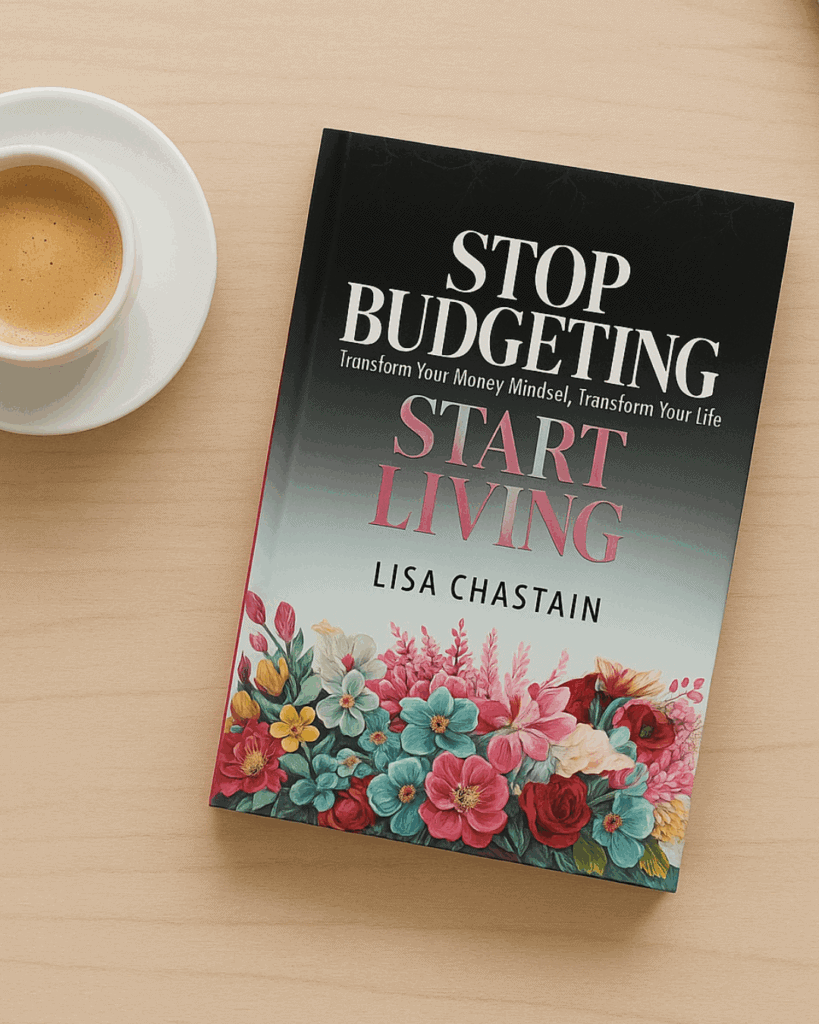
I’m beyond excited to share that Stop Budgeting Start Living is officially here! This book is the culmination of years of working with women who are ready to rewrite their money stories and step into financial confidence.
Inside, you’ll find strategies to uncover the roots of your money mindset, break free from limiting financial patterns, and create a new path toward wealth and independence.
This release feels especially powerful as we honor the progress women have made financially—and the bold steps we’re still taking together. I can’t wait for you to dive in, apply these tools, and start building the financial future you deserve.
Your journey to living fully, without the weight of restrictive budgeting, starts now.